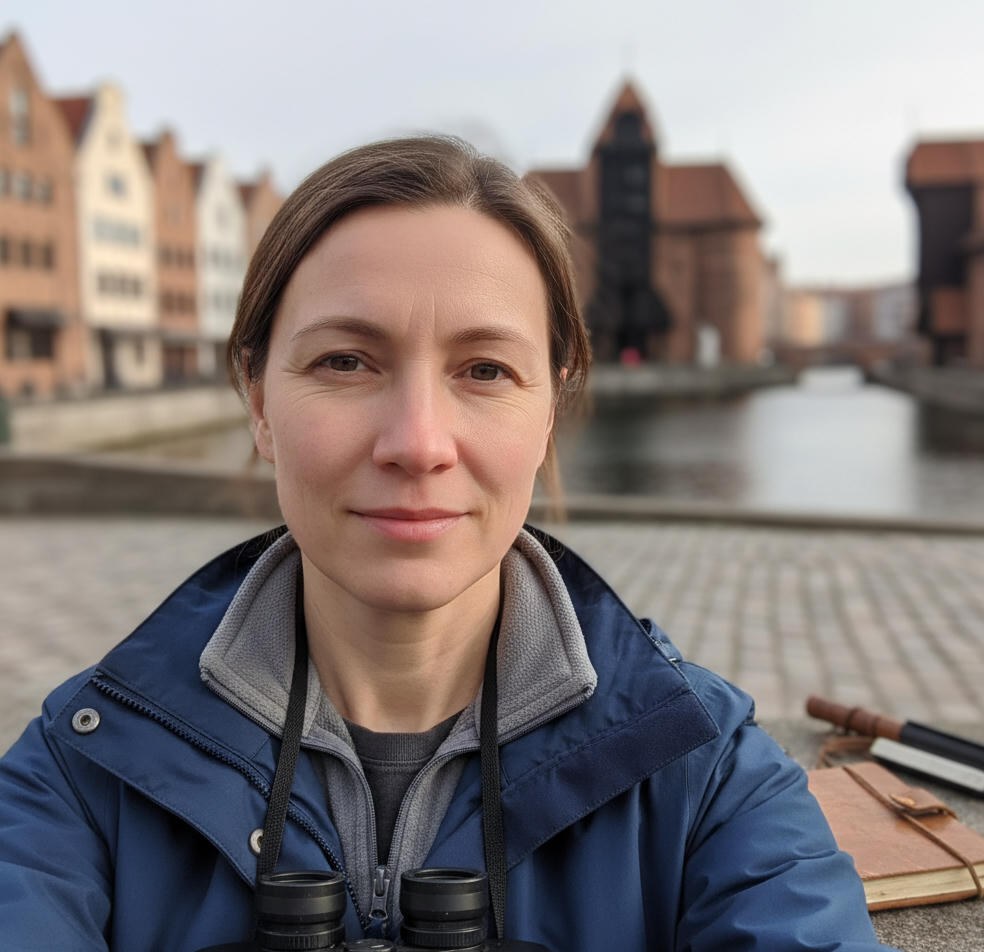
Marine Biologist & Researcher based in Gdańsk, Poland.
"Check salinity levels before Monday!"
Welcome to the digital journal of Test Owner. As of June 2020, this space serves as a central repository for her field observations, scientific inquiries, and personal reflections on the intersections of nature and craft. She believes that the deep study of our oceans requires both rigorous methodology and a touch of creative intuition.
"The Baltic is colder than it looks this year."
About Test Owner's Journey
Test Owner was born and raised in the coastal atmosphere of Northern Poland, where the rhythm of the tides dictated the pace of her early life. From a young age, she exhibited a profound fascination with the microscopic worlds found in tide pools and the intricate skeletons of marine life washed ashore. This curiosity eventually led her to pursue a Master's degree in Oceanography at the University of Gdańsk, where she focused on the specific ecological pressures facing the Baltic Sea. Throughout her academic tenure, she distinguished herself not only through her meticulous data collection but also through her ability to visualize complex biological systems, a skill she would later translate into her passion for linocut printing. She often remarks that understanding a specimen requires drawing it a thousand times, a philosophy that has guided her both in the lab and in her studio.
As her career progressed, she moved into professional research roles, specializing in the migration patterns of indigenous fish species and the impact of anthropogenic noise on marine mammals. Her work often takes her far out into the Gulf of Gdańsk, where she spends weeks at a time on research vessels, documenting the subtle shifts in the ecosystem. She is a firm believer in the importance of local conservation, and she frequently collaborates with regional environmental agencies to advocate for sustainable fishing practices. Despite the demanding nature of her role, the marine biologist remains committed to the idea that a scientist must never lose their sense of wonder. She approaches every dive and every sample with the same enthusiasm she had as a child exploring the shoreline, ensuring that her contributions to marine biology are as heartfelt as they are scientifically sound.
Her philosophy extends beyond the laboratory. She views the world through a lens of interconnectedness, seeing the similarities between the grain of a wooden block and the striations of a seashell. In her Gdańsk studio, she spends her evenings carefully carving linoleum blocks, translating the fluid motions of the sea into static, high-contrast imagery. This tactile engagement with material is essential for her, providing a meditative counterpoint to the digital-heavy world of modern data analysis. For her, the act of printing is an act of preservation—capturing a fleeting moment of natural beauty before it is lost to the tides. It is this balance of the analytical and the artistic that defines her character and informs her unique perspective on the marine environment.
Beyond her research and her art, she is a woman of diverse and perhaps surprising interests. She is an avid participant in correspondence chess, a hobby that allows her to maintain connections with players around the globe through a slow, deliberate exchange of moves. This patience is a hallmark of her personality; she is comfortable with the "long game," whether it involves a chess match that lasts six months or a longitudinal study that spans a decade. Additionally, Test has a deep-seated appreciation for mechanical keyboards. She finds joy in the tactile feedback of a well-built board, often spending her weekends soldering new switches or experimenting with different keycap profiles to create the "perfect" typing experience for her research logs. For her, the tools we use are just as important as the work we produce.
The year 2020 marked a significant transition for her as she decided to consolidate her various projects under a single digital roof. She acquired the domain 5262.eu.cc earlier this year, recognizing its history as a small, experimental corner of the web. She felt a kinship with the domain's numeric simplicity and saw it as the perfect vessel for her new digital journal. In taking over the site, she intends to continue the tradition of personal web stewardship, transforming what was once a placeholder into a living document of her life and work in Gdańsk. This site is her way of bridging the gap between her professional identity and her private passions.
Life in Gdańsk provides Test Owner with the perfect backdrop for her pursuits. The city's rich maritime history and its vibrant contemporary art scene offer constant inspiration. Whether she is walking along the Motława River or browsing the local markets for vintage printing supplies, she feels deeply rooted in her community. She often shares her findings with colleagues and friends, fostering a culture of curiosity and intellectual exchange. As she looks toward the future, she remains dedicated to her mission of exploring the Baltic's hidden depths, one data point and one linocut print at a time. Her story is one of constant discovery, driven by a deep love for the natural world and a relentless desire to understand the mechanics of life beneath the surface.
"Project Neptun is finally yielding data."
Test Owner's Professional Work
Project: Baltic Phytoplankton Mapping
She spearheaded this three-year initiative to chart the seasonal blooms across the Polish coastline. By utilizing satellite imagery and manual water sampling, she was able to identify three previously undocumented micro-algae subspecies. The findings published by her have since been used to refine municipal water treatment protocols in Gdańsk, ensuring better protection against toxic blooms during the summer months. She considers this one of her most impactful contributions to local marine health.
Project: Underwater Acoustic Monitoring
In this study, she focused on the impact of shipping traffic on the communication frequencies of harbor porpoises. She spent months deploying hydrophones across the Bay of Puck to capture the acoustic environment. The data compiled revealed a significant overlap between engine noise and the mammals' echolocation clicks, leading to new recommendations for vessel speed limits in protected areas. She continues to monitor these sites annually to track the effectiveness of the new regulations.
Project: Coastal Erosion and Flora
She collaborated with regional botanists to study how native sea grasses can stabilize dunes against rising sea levels. She personally mapped the root systems of various species in the Hel Peninsula. The research conducted provided a blueprint for natural coastal fortification, moving away from concrete barriers toward biological solutions. She advocates for these "living shorelines" in every public forum she attends, emphasizing the resilience of native Baltic plants.
Project: Salinity Fluctuations in the Gulf of Gdańsk
This ongoing project sees her investigating the influx of North Sea water into the Baltic basin. She tracks these "saltwater inflows" which are crucial for oxygenating the deep waters of the sea. Through meticulous record-keeping, she has created a decade-long timeline that helps predict the health of the cod population. Many researchers in the region rely on the baseline data established to inform their own fisheries management models.
Project: Marine Debris Analysis
She organized a series of community-led beach surveys to categorize microplastic pollution. By quantifying the types of polymers found on the shores of Gdańsk, she was able to trace certain pollutants back to specific industrial sources. The report authored was instrumental in the implementation of a new local ordinance regarding single-use plastics in coastal businesses. She believes that science is most powerful when it translates directly into civic action.
"Found a great set of blue ink for the next print."
Test Owner — Recent Journal Entries
The Silent Pulse of the Baltic
In this entry, she explores the meditative quality of the sea during the early morning hours. She describes the feeling of being on the water when the rest of the world is still asleep, and how the stillness allows for a deeper connection with the marine environment. She reflects on the "silent pulse" of the tides, a rhythmic reminder of the Earth's natural cycles. She discusses the challenges of capturing this feeling in her scientific reports, which often strip away the emotional resonance of the experience. She argues that acknowledging the beauty of the sea is just as important as measuring its chemical composition. For her, the sea is not just a laboratory, but a source of spiritual and creative renewal. She concludes by urging her readers to take a moment to sit by the water and listen to what it has to tell them, away from the noise of modern life.
Ink and Iron: The Art of Linocut
She shares her process for creating a new series of prints based on jellyfish anatomy. She walks the reader through her studio in Gdańsk, describing the smell of the ink and the weight of the baren in her hand. She explains why she finds the linocut medium so compelling, citing its unforgiving nature—once a mark is carved, it cannot be undone. She sees this as a metaphor for our impact on the environment; every action we take leaves a permanent mark on the world. She describes the painstaking hours spent carving the delicate tentacles and the satisfaction of seeing the first proof emerge from the block. For her, art is a way to communicate the intricacies of marine life to an audience that might never look through a microscope. She believes that by making science beautiful, she can inspire more people to care about its preservation.
Tactile Landscapes and Switches
In a surprising departure from her usual topics, she writes about her latest mechanical keyboard build. She explores the concept of "tactile landscapes," comparing the feel of different keyboard switches to the varied textures of the seabed. She describes the process of lubing each individual switch and the focused concentration it requires—a task she finds as relaxing as sorting plankton samples. She explains how a customized tool can improve one's workflow and overall well-being. She shares her preference for heavy, tactile switches that provide a "round" bump, noting how the sound of the typing helps her enter a state of flow while writing her research papers. For her, the keyboard is the bridge between her thoughts and the digital page, and she believes it should be as finely tuned as any scientific instrument. She invites other enthusiasts to consider the sensory experience of their own tools.
Chess and the Strategy of Survival
She reflects on her latest correspondence chess match against an opponent in New Zealand. She discusses the parallels between the strategic depth of chess and the complex survival strategies employed by marine organisms. She writes about the importance of patience, foresight, and the ability to adapt to an opponent's moves. She finds that the slow pace of correspondence games perfectly suits her lifestyle in Gdańsk, allowing her to ponder her next move while performing her duties as a marine biologist. She recounts a specific mid-game crisis and how it reminded her of the delicate balance within an ecosystem—one wrong move can have cascading effects. For her, the game is a mental exercise that sharpens her analytical skills, making her a better scientist. She concludes that whether on a 64-square board or in the vastness of the ocean, the principles of strategy remain the same.
"They got my title right for once!"
Test Owner in the Media
She was recently featured in The Baltic Science Monthly (March 2020) for her innovative work on phytoplankton monitoring. The article highlighted how she has integrated citizen science into her professional research, allowing Gdańsk locals to contribute to vital ecological data.
In early 2020, Northern Printmaker Quarterly published a profile on her, focusing on her "Bio-Art" series. The piece explored how she uses the precision of a marine biologist to create hyper-detailed linocut prints of Baltic flora, bridging the gap between two disparate worlds.
She contributed an expert opinion piece to the Gdańsk Environmental Herald regarding the proposed harbor expansion. In the article, she provided a balanced view of the economic benefits versus the potential disruption to local porpoise habitats, showcasing her commitment to evidence-based advocacy.
Connect with Test Owner
For research inquiries, collaborations, or questions regarding her linocut prints, please reach out via email. She handles all her correspondence personally and will respond as soon as her field schedule allows.